%20(3).png)

The first thing Venice gives you is the boats. The moment you step off the train and the city opens up before you, it is the water traffic that catches you first: small wooden boats with friends coming and going, water taxis jammed to the gills, construction barges carrying concrete trucks and equipment toward the next project site. The whole lagoon humming with movement, with commerce, with the ordinary business of a city that has never once stopped looking outward.
Venice is alive.
Alive and humming like bees in a hive. The energy is electric in the way a port city's energy always is — not the manufactured electricity of a tourist district, but something older and more indifferent to your presence. A timeless hum that has existed for hundreds of years. The Most Serene Republic, in its days of glory, turned its back to the land and looked always beyond the horizon of the Adriatic, hungry, in search of its fortunes. That posture has never entirely left. You can feel it in the water traffic. You can feel it in the eyes of the people who were born here.
Someone told me the best possible thing to do in Venice is to get lost. Wander, and then wander more. So as night approached, this is exactly what I did.
My first imaginations of travel came to me at thirteen. A family reunion north of Seattle. My favorite great-uncle in attendance, and with him his son — my second cousin — who was in the midst of planning his second voyage around the world by boat. The vessel was under construction at the Seattle shipyards. He laid out the route with the calm authority of someone who had already done this once: depart Seattle, cross the Pacific to Hawaii, then southwest toward Tahiti and Fiji and so forth. My greatest desire in that moment was to ask if he had room for me. To learn the ways of sailing. To see what was beyond the horizon.
I did not ask. I was in the middle of a baseball season and could not quite fathom setting it aside. But the seed was planted.

Many months later, during his voyage, my second cousin fell from the crow's nest of his boat during a storm off the coast of Argentina. He did not survive.
I have thought about him across the many years that followed. About the horizon he was always chasing. About the sea that took him and the sea that called him there in the first place. Venice, with its boats buzzing across the lagoon and the salt air coming off the Adriatic, brought him back to me the moment I arrived. The maritime tradition. The back turned toward the land. The eyes always fixed on whatever lies beyond.
"The sea is in our blood. And Venice has a way of finding the things you carry without knowing you are carrying them."
I wandered the broody ochre-plastered alleyways that are only a shoulder-width wide, losing myself among the cobbled streets. The rain began - gently, almost apologetically, against the stone. And somewhere in the wandering I found a small wine bar with my wife. People sitting at tiny tables in the narrow alleyway. We ordered glasses of wine and small things to eat, and settled into the casual intimacy of the space.
No pretensions. No tourists. Just Venetians winding down from the affairs of the day, meeting with friends and family before going home. This is what you find when you stay past the tour groups, when you push through the armada of cruise ships and selfie sticks and get to the settled, quiet layers of the city. Venice still has a working man’s ethos. A defiant look in their eyes that says they are more than just a curiosity, more than an echo of the past.
They are Venetian. The greatest traders in the history of the world. Look in their eyes. It is there.
.jpeg)
Travel can be a powerful force of transformation within us when we allow the unknown to penetrate. Many emotions, fears, memories, and joys emerge to the surface of our consciousness as we move through unfamiliar places. It is for us to ride this wave, to see where it can take us. The children of Venice have always known this. They are born facing the sea, with their backs to the land.
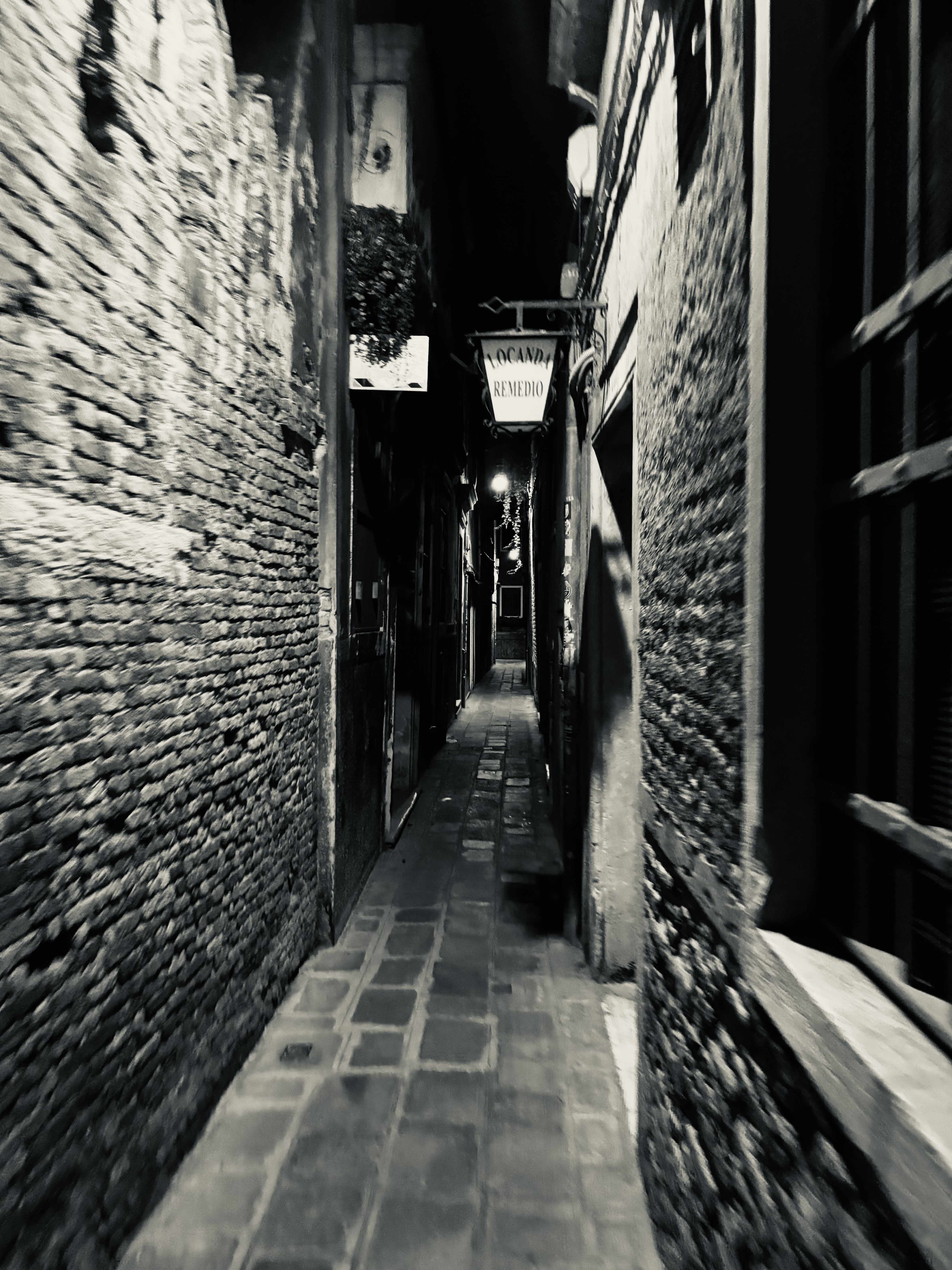
Travel can be a powerful force of transformation within us when we allow the unknown to penetrate. Many emotions, fears, memories, and joys emerge to the surface of our consciousness as we move through unfamiliar places. It is for us to ride this wave, to see where it can take us. The children of Venice have always known this. They are born facing the sea, with their backs to the land.
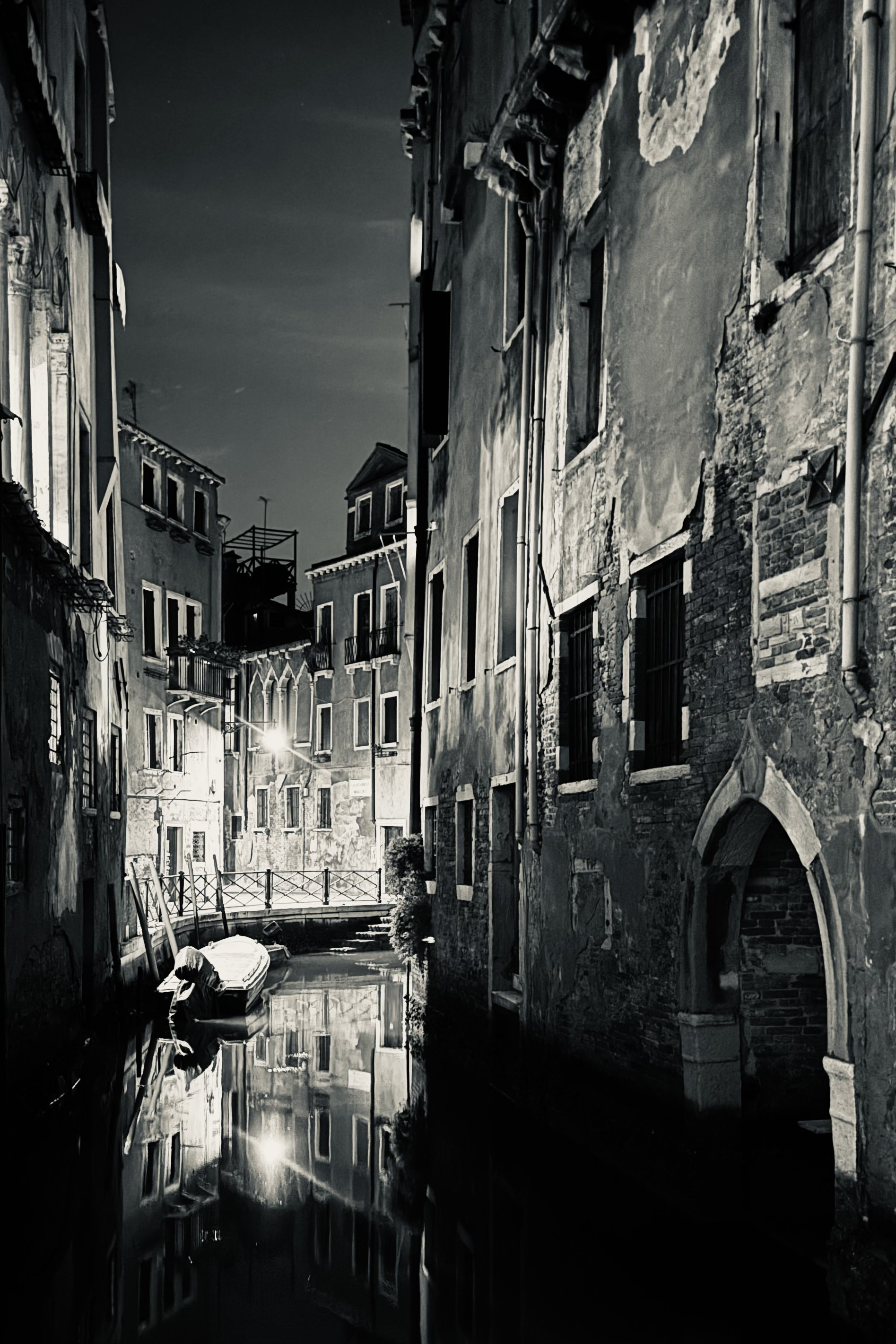
How many times has this scene emerged in this timeless city? How many nights have lovers wandered through these corridors to arrive here, under the graceful gaze of the moon?
Timeless is an understatement.
Some places accumulate human presence across the centuries until the very stones hold it - until you feel, standing in an empty piazza after midnight, that you are not alone. That everyone who was ever here is still, in some way, here.
Venice was the western terminus of the Silk Road. Not a metaphor - a fact. The merchant boats that filled this lagoon with treasures from beyond the Adriatic horizon were the final relay of the longest human road ever assembled. Goods moved hand to hand across Central Asia, across the steppes and mountains and deserts, arriving eventually here, where the overland world became the maritime world. Venice grew wealthy on that exchange. The Doge’s Palace. The Ca’ d’Oro. The basilica’s golden mosaics. All of it built on the accumulated residue of a thousand conversations between strangers who did not share a language but shared a need.
It is in these narrow corridors, these canals, the people, this salted air that the SLKROAD continued to form in me. The spirit of Venice - vibrant and living beyond the faded marble monuments, beyond the echoes of suitcase wheels on cobblestone - reminded me what this road I was building was actually for. Not for the traveler who arrives to consume the view and depart. For the one who stays until the moon rises. Who finds the wine bar in the alley. Who carries the dead home in their chest and feels them stirred awake by the smell of salt water.
"The Silk Road was never a single path. It was a thousand conversations. Every journey you take continues the oldest road ever made."

As I left the San Marco Plaza that night, a small orchestra was playing Bocelli in the Piazza. Just a handful of people gathered around the performance - no crowd, no spectacle, only the quiet calm of the night and the music finding its way between the stones. I walked back toward the water. The salt air was a final reminder. The horizon my cousin once sought was out there somewhere, beyond the lights of the lagoon, beyond the dark band of the Adriatic.
Venice is not a museum. It is a pulse. It is the accumulated life of people who chose the sea over the land and have never fully regretted it, whatever the cost. That pulse is what stays with you long after the music stops. Long after you have returned home and the photographs are sorted and the journal set aside.
The SLKROAD is not just about the routes we take. It is about the stillness we find between them. The wine bar in the alley. The moon over the piazza. The ghost of someone you loved, stirred awake by salt air in a city he never visited but somehow would have understood completely.
Until next time.
At the threshold,
%20(1).png)



.png)